

Key Points:
- ABA therapy for girls with autism addresses how signs are frequently missed due to masking, where girls copy social behavior to blend in while hiding real stress.
- Diagnostic tools historically centered on boys, leaving many girls unidentified until adolescence.
- Support can target emotional regulation, social communication, and daily living skills tailored to how autism actually presents in girls.
A daughter can look “fine” on the outside. A teacher may describe her as quiet, bright, and well-behaved. Then the after-school crash shows up at home. Big emotions, shutdowns, or tears over small changes can leave you wondering what you are missing and why it feels so hard to get clear answers.
That gap is one reason ABA therapy for girls with autism comes up so often after months or years of uncertainty. A clearer view of how girls may show signs, how masking can hide them, and what support can focus on can help you choose next steps that feel practical.

Why Girls on the Spectrum Are So Often Overlooked
Many screening tools, diagnostic examples, and early research were built around how autism was most often recognized in boys. That history can shape what adults expect to see, even when a child’s support needs are real.
A large U.S. surveillance report identified autism more often in boys than girls, with a male-to-female ratio of 3.4 among 8-year-olds in the tracked sites. That difference can reflect several things at once, including how signs show up and how often girls are referred for evaluation.
A recent population study from Sweden followed about 2.7 million people and found that childhood diagnoses were more common in boys, but girls “caught up” during adolescence, with the ratio approaching 1:1 by age 20.
That pattern lines up with what many caregivers report. A girl may cope well enough in structured settings, then struggle in ways that look like anxiety, perfectionism, or social stress instead of the “classic” picture people expect.
Some reasons autism diagnosis in girls is missed more often include:
- Social imitation: Some girls copy their peers closely, so differences show up later.
- Internal stress: Some girls hold distress inside at school, then release it at home.
- Adult expectations: Quietness and people-pleasing may get praised, so concerns get minimized.
- Co-occurring concerns: Anxiety, sleep problems, or attention issues may get noticed first.
None of these factors points to a parenting mistake, but rather to a system that still misses many girls until life demands increase.
What Autism Masking Looks Like in Girls
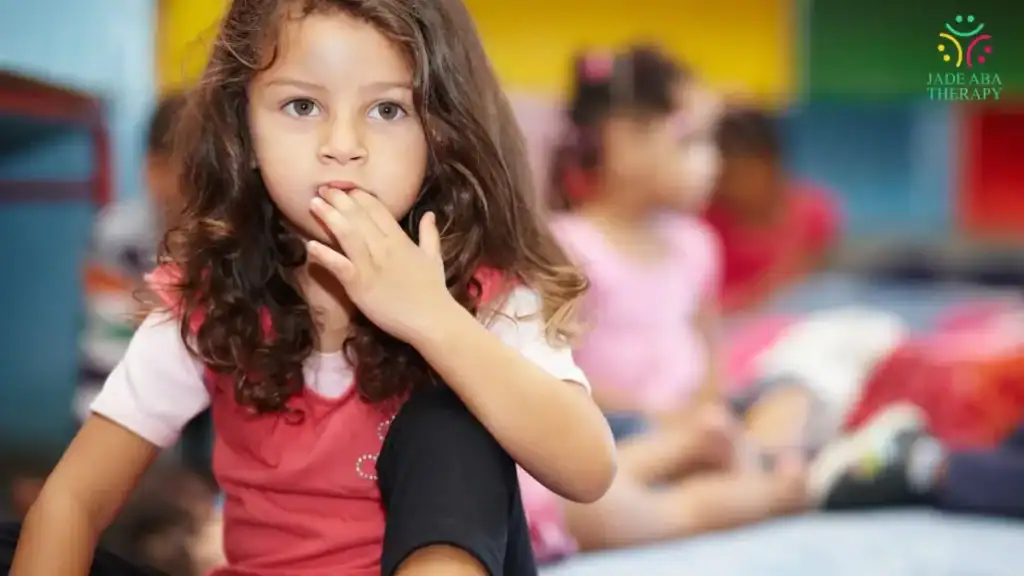
Masking is a coping style where a child learns to hide differences and copy social behavior to blend in. Autism masking in girls can look “social” on the surface, while the effort behind it stays invisible.
Common masking patterns can include:
- Rehearsing: Practicing conversations in advance and using memorized scripts.
- Mimicking: Copying facial expressions, slang, or gestures to match peers.
- Holding it in: Staying composed all day, then melting down after school.
- Over-preparing: Needing detailed plans to feel safe in social situations.
Autism masking and burnout are closely linked. A recent meta-analysis linked camouflaging with higher anxiety, depression, and social anxiety, and lower mental well-being. The meta-analysis included 5,897 autistic participants.
This also helps explain why autism in women and late diagnosis are discussed more now. Some women describe years of “passing” socially while feeling chronically exhausted or misunderstood.
That does not mean masking is “bad.” It can be a survival skill. Support often focuses on reducing the load and building skills that help a child feel steadier without forcing a personality change.
Signs That May Point to Autism in Girls
A checklist rarely captures what daily life looks like. Many caregivers first notice patterns, not single behaviors. Signs of autism in girls may show up as a mix of social stress, sensory sensitivity, and rigidity that gets mistaken for shyness or moodiness.
Some possible signs may include:
- Friendship confusion: Wanting friends but struggling with unspoken rules.
- Intense interests: Deep focus on a topic that seems “typical” (books, animals, art), but with high rigidity.
- Sensory sensitivity: Strong reactions to noise, clothing textures, lights, or smells.
- Big reactions after social time: Tears, irritability, or shutdowns after school or parties.
- Strong need for predictability: Distress when plans change, or routines shift.
- Better in structured settings: Doing well in class but struggling in lunch, recess, or group work.
- “Role-playing” socially: Copying peers closely, then feeling wiped out afterward.
Location does not change autism, but local access can shape what happens next. For families noticing signs of autism in girls in Maryland, the first steps often involve documenting patterns, requesting school input, and seeking a developmental evaluation through a pediatrician referral or local specialists.
Helpful ways to capture what you see:
- Write short examples: What happened, where, what changed, and how long it lasted.
- Track triggers: Noise, transitions, peer conflict, hunger, or fatigue.
- Note the recovery time: Minutes, hours, or the rest of the day.
These notes can make clinical conversations clearer, especially when a child “performs well” during short appointments.
How ABA Therapy Can Support Girls on the Spectrum
ABA therapy for girls with autism can focus on skills that align with how a girl actually experiences her day, including how she behaves at home after masking at school. Support often works best when goals are practical, respectful, and based on what helps the child function with less stress.
ABA therapy for girls with autism and social communication
Social goals do not have to mean “acting typical.” They can focus on comfort, safety, and clarity.
Support may include:
- Starting and ending interactions in ways that feel natural.
- Self-advocacy scripts like “I need a break,” or “Say that again, please.”
- Friendship skills such as taking turns, choosing activities, and handling minor conflict.
- Recognizing body signals that show rising stress before it turns into a shutdown.
Emotional regulation after masking-heavy days
Girls who mask may look calm, then crash later. Emotional regulation in autism often requires coping tools practiced when a child is calm, making them easier to use when stress rises.
Skills can include:
- Break planning: Short reset routines during homework or chores.
- Transition supports: Visual schedules, warnings before changes, and choice-making.
- Coping routines: Breathing, movement, sensory tools, or quiet time that a child can request.
Daily living and independence skills
Independence goals can reduce stress and increase predictability.
Targets may include:
- Morning and bedtime routines using step-by-step supports.
- Hygiene and self-care with prompts that fade over time.
- Flexibility practice in small, planned steps, like changing the order of tasks.
Anxiety-related patterns
ABA does not diagnose or treat anxiety like a mental health clinic would, but it can address behavior patterns tied to worry and overload.
Support may include:
- Teaching coping responses that replace avoidance.
- Building tolerance gradually for changes and uncertainty.
- Strengthening communication so a child can express discomfort earlier.
Parent involvement in real-life settings
In-home services can be especially helpful when a girl holds it together outside, then shows her real struggles at home. For families seeking ABA therapy for girls with autism in Virginia, in-home sessions can allow skill practice during daily routines, like mornings, meals, homework, and transitions.
A strong plan should feel like:
- Goals that match daily life.
- Clear data on what is improving.
- Respect for the child’s comfort and dignity.
Why Getting Support Early Helps
Early support does not require certainty or a perfect timeline. It can start with screening, evaluation, and targeted goals that reduce stress now.
Medical guidance supports early screening. It recommends screening for autism for all children at 18 and 24 months during well-child visits.
Earlier support can also focus on practical skill-building. A Cochrane review identified five studies of early intensive behavioral intervention for young children and described it as typically delivered at 20 to 40 hours per week over multiple years in those trials.
Intensity and timelines vary widely in real life, and goals should match the child and family schedule. A clinician can help you decide what level of support is appropriate.
Girls can benefit from earlier support for another reason. Waiting until signs become “obvious” can mean more time spent masking, more social confusion, and more accumulated stress.
FAQs About ABA Therapy and Autism in Girls
Can ABA therapy be tailored specifically for girls on the autism spectrum?
ABA therapy can be individualized for each child, including how autism often shows up in girls, such as subtle social communication challenges, masking, and emotional overload after school. A BCBA typically designs goals based on strengths, needs, and daily routines, then adjusts targets as the child grows.
What are the most commonly overlooked signs of autism in girls?
Commonly missed signs of autism in girls can include strong but “typical-looking” interests, copying peers to blend in, social exhaustion after school, sensory sensitivity, and distress with changes. Some girls seem to do well in structured settings but struggle during unstructured social time, which can delay recognition.
Is it too late to start ABA therapy if my daughter was diagnosed later in childhood?
It is not too late to start ABA therapy after a later diagnosis. Support can still focus on practical goals such as self-advocacy, emotional regulation, daily living skills, and social communication. A BCBA assessment often helps identify priorities that match the child’s current needs and the family’s routines.
Reach Out for Support That Fits Your Child
Signs can be subtle in girls, and masking can hide real stress for a long time. Support can focus on practical skills, emotional regulation, and daily routines that help your child feel steadier at home and in the community.
Jade ABA Therapy provides in-home Applied Behavior Analysis (ABA) therapy for children with autism in Maryland and Virginia.
Get in touch today and share what you are seeing, and talk through what support can look like next.