
Key Points:
- ABA therapy builds communication in nonverbal autistic children by using evidence-based strategies like functional communication training, visual supports, and augmentative tools (AAC, PECS, or sign).
- Programs start with foundational skills like shared attention, then teach requesting, refusing, and social exchange.
- Prompts are faded over time to foster independence.
Seeing a child reach kindergarten age without spoken words can feel heavy and uncertain. Around 25–30% of autistic children remain minimally verbal past age 5, even after years of services. ABA for nonverbal autism programs aim to change that picture by building communication in small, functional steps that fit daily life.
Instead of treating “talking” as one huge goal, well-designed ABA focuses on readiness, a clear ladder of communication skills, smart prompting, and the right mix of tools. As you learn how those pieces work together, you can better judge whether an approach will move your child toward more independent ways to ask, refuse, and connect.

Who Benefits From Communication-Focused ABA?
Many families first hear about ABA therapy for autism when a child receives an autism diagnosis. Autism now affects about 1 in 31 children aged 8 years in the United States, which means more parents are weighing therapy options each year.
Communication-focused ABA is especially important when:
- A child uses few or no spoken words. The child may rely on pulling adults, crying, or behavior to get needs met.
- Gestures are limited or unclear. The child might not point, wave, or nod in ways others easily understand.
- Challenging behavior replaces communication. Hitting, grabbing, or screaming may work faster than any current communication system.
For children with nonverbal autism, communication goals in ABA should go beyond “say more words.” Programs should consider how the child currently communicates, what motivates them, and what types of responses are realistic right now.
What Does Communication Readiness Look Like in ABA?
Before asking a nonverbal child to request or answer questions, ABA teams usually build “learning to learn” skills. That step can feel slow, yet it often predicts how quickly more advanced communication will grow.
Communication readiness often focuses on:
- Pairing: The therapist becomes a source of good things.
- Shared attention: The child and adult look at, touch, or explore the same object or activity.
- Early following directions: The child responds to simple cues in fun routines.
- Motivation building: Sessions highlight activities the child wants to repeat.
A typical readiness plan may include:
- Pairing time: The therapist plays, sings, and offers favorite items without demands so the child chooses to approach and begins to build nonverbal communication strategies for autism.
- Simple routines: Songs, tickle games, and turn-taking where the child anticipates a “next step.”
- Visual supports: Photos, simple schedules, or objects that show what is happening now and next.
Research on minimally verbal autistic children shows that early social attention and receptive language skills are linked to later word learning. When ABA for nonverbal autism invests in these foundations, later goals such as requesting and commenting have a stronger foundation.
Parents can ask teams to show how pairing, shared attention, and motivation are built into each week, rather than as an afterthought.
Functional Communication Ladder for Nonverbal Children
Communication does not jump from “no words” to complete sentences. ABA usually teaches a ladder of skills, with each rung giving the child more control over daily life.
A common ladder includes:
- Requesting (mands in ABA). The child learns to ask for a snack, toy, break, or song.
- Refusals. The child learns ways to say “no,” “all done,” or “stop” safely.
- Help and break requests. The child learns to ask for support or a pause instead of melting down.
- Choices. The child learns to pick between items, people, or activities.
- Comments. The child starts to label or share things, like “car,” “big splash,” or “bubbles.”
- Back-and-forth turns. The child practices short exchanges, such as question–answer or comment–response.
Functional communication training, a widely used ABA method, replaces challenging behavior with clear communication that serves the same purpose. Reviews show that this approach is one of the most effective strategies for reducing severe behavior while increasing meaningful communication.
In practice, that may look like:
- Request cards: The child hands a “juice” picture instead of screaming at the fridge.
- Stop card or sign: The child shows a “stop” visual when noise is too loud.
- Help button: A device button says “help me” during complex tasks.
Parents can ask teams to map out where their child currently sits on this ladder and which rung is next. That simple visual often makes progress easier to spot, even when changes in speech alone feel slow.

How ABA for Nonverbal Autism Uses Prompts Without Creating Dependence
Prompts help a child succeed before a skill is fully learned. Without a fade-out plan, though, children may wait for adults to guide every communication attempt. ABA for nonverbal autism should include a clear prompting strategy, often drawing on verbal behavior therapy in ABA, that moves toward independence over time.
Common prompt types include:
- Natural cues: Pausing and looking expectantly, which is the lightest prompt.
- Gestural prompts: Pointing to a picture or device button.
- Model prompts: Showing the child how to touch or say the response.
- Physical prompts: Gently guiding a hand to a picture or sign.
Helpful plans often:
- Start with least-to-most prompting when a child already knows part of the skill, so they get a chance to respond on their own.
- Use a time delay, where the adult waits a few seconds before prompting, to encourage initiative.
- Use errorless teaching in the early stages of a brand-new skill, then quickly shift to lighter prompts.
When ABA for nonverbal autism keeps written rules about when to prompt and when to fade, teams avoid “over-helping.” Parents can also use the same approach at home so the child experiences a similar prompt pattern across settings.
Choosing AAC, PECS, or Sign: How Teams Decide
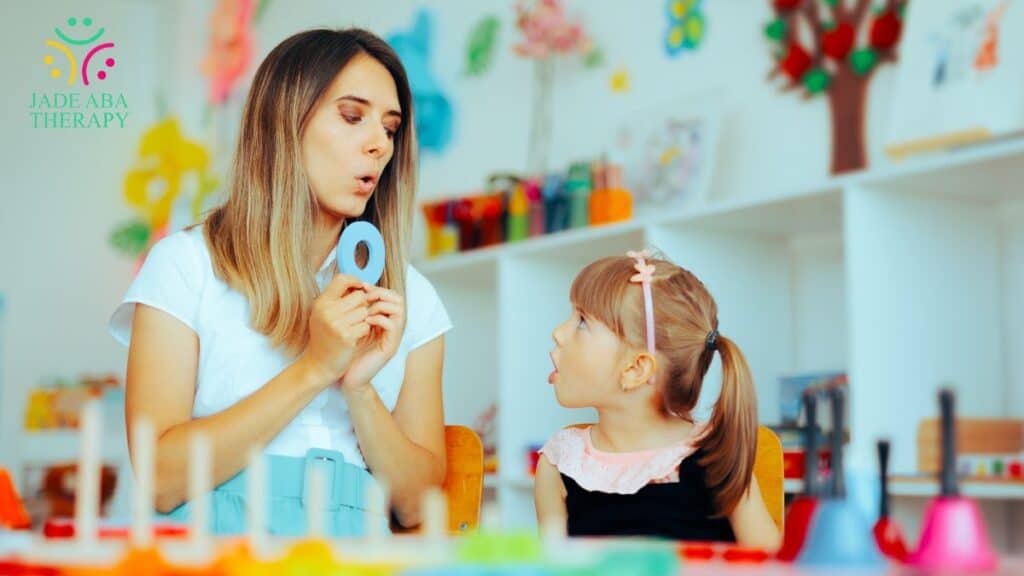
Many nonverbal autistic children benefit from augmentative and alternative communication, or AAC. AAC can include picture exchange, sign language, communication books, or speech-generating devices. Professional groups describe AAC as a way to supplement or replace speech when speech alone does not meet communication needs.
ABA for Nonverbal Autism and AAC Tool Choice
Research shows that AAC does more than support requesting. A recent appraisal found that children with autism who use aided AAC can learn a range of functions, such as commenting and asking questions, especially when interventions use prompting and time delay in predictable routines.
Teams often weigh:
- Motor skills: Sign may be easier for a child with strong hands, while fine-motor challenges may favor pictures or devices.
- Visual strengths: Some children scan visual arrays and benefit from symbol-based systems.
- Portability: Devices or books need to travel to school, playgrounds, and shops.
- Family comfort: Caregivers must feel ready to model and respond to the system daily.
Studies of the Picture Exchange Communication System report moderate to high gains in non-vocal communication for most participants, with one evidence review noting positive changes for 19 of 20 children across several studies.
Other research shows AAC interventions can improve language development and reduce challenging behavior in autistic children. Parents can ask teams to explain:
- Why was a specific system chosen over alternatives.
- How success will be judged over the next 6 to 12 months.
- How speech goals stay on the table while AAC is in use.
A strong plan treats AAC, PECS, or sign as tools to expand communication, not as a last resort.
Generalization and Home Practice: Moving Skills Beyond the Therapy Room
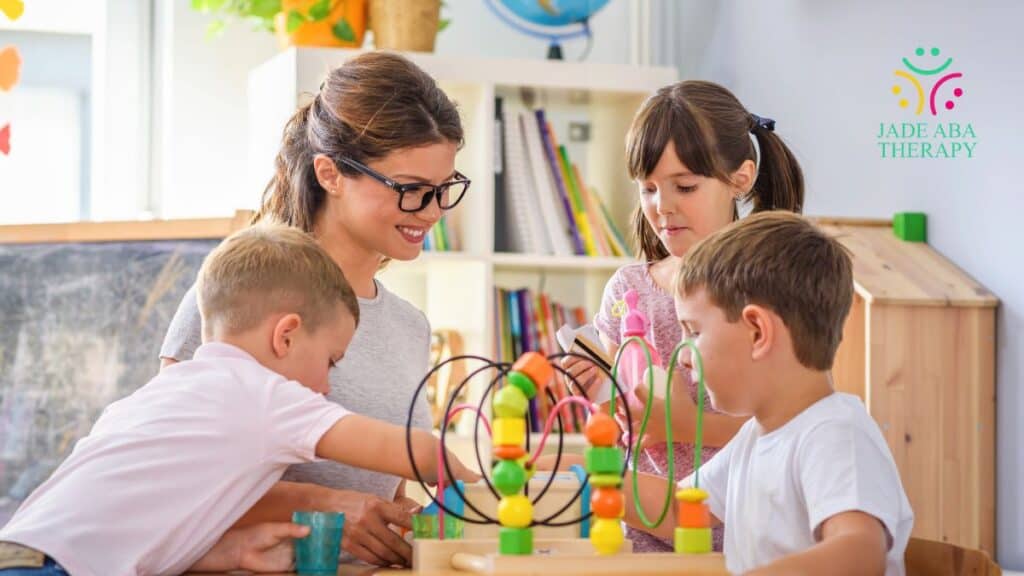
Many blogs describe communication goals but skip the transfer step. Generalization means the child uses the same skill with different people, in new places, and with new materials. Without a plan, a child may request “bubbles” only at a single small therapy table, not elsewhere.
A generalization plan usually includes:
- People: Practicing with parents, siblings, teachers, and peers.
- Places: Using communication tools in the kitchen, car, playground, and classroom.
- Materials: Changing toys, snacks, or photos while keeping the same communication target.
Examples of simple home routines are:
- Snack routine: The child uses a card, sign, or device to request “drink,” “cracker,” and “more” during snack each afternoon.
- Play routine: A caregiver prompts “go,” “stop,” or “again” during swings or chase games.
- Choice routine: The child picks pajamas, bedtime stories, or songs using pictures or a device.
For many children in ABA for nonverbal autism, these short, repeated routines matter more than occasional long practice blocks. Progress often shows up first in these tiny daily moments, then spreads to larger settings like school.
Tracking Progress in Nonverbal Communication
Parents deserve more than “they are doing better.” Progress tracking for nonverbal communication should include clear, concrete measures.
Practical measures often include:
- Independent initiations: How often the child starts communication without prompts.
- Latency: How long it takes the child to respond after a cue or pause.
- Breakdowns: When communication fails, and behavior escalates instead.
- Repair attempts: Whether the child tries again with a different sign, card, or button.
Simple data forms might log:
- The number of independent requests per hour.
- The number of successful “no” or “all done” signals during hard tasks.
- The number of times a new word or symbol appears across the day.
These details matter because many autistic children with limited speech also have higher support needs across daily living. The CDC now reports that about 26.7% of people with autism meet criteria for profound autism, meaning intensive support across settings.
Parents can request regular summaries that show graphs or simple counts across months rather than only short notes after each session.

Frequently Asked Questions
At what age should a nonverbal autistic child start ABA focused on communication?
A nonverbal autistic child should start communication-focused ABA as soon as communication delays appear, often before age 3. Early programs use play-based methods and simple goals. For older nonverbal children, ABA can include AAC, PECS, or sign language alongside spoken language goals.
Does ABA replace speech therapy for nonverbal children?
ABA does not replace speech therapy for nonverbal children. Many benefit from both, with BCBAs and speech-language pathologists coordinating goals. Speech therapy targets sound and language structure, while ABA builds functional communication in routines. Shared tools and data help ensure consistent practice across settings.
How long does it take to see communication changes in nonverbal children in ABA?
Communication changes in nonverbal children in ABA may appear within weeks if strong motivation and clear systems are in place. Others need months of preparation through pairing and shared attention. Basic requesting often develops in early phases, while advanced language requires longer, consistent practice and realistic 3- to 6-month goals.
Take the Next Step Toward Communication Growth
Understanding how nonverbal autism affects communication helps families focus on skills that change daily life. Evidence-based tools such as AAC, PECS, sign language, and functional communication training give children more ways to ask, refuse, and share in real-life situations. Over time, those small, consistent steps can reduce frustration and open more social opportunities.
At Jade ABA Therapy, we design communication-centered programs that blend structured ABA strategies with everyday routines and caregiver coaching. Our in-home ABA therapy for children with autism in Virginia and Maryland brings this support directly into the spaces where your child eats, plays, and learns.
If you are ready to see how a clear communication ladder, thoughtful prompting, and meaningful data can support your child’s voice, contact us today to discuss next steps with our team.